Filed Under Story

Kentucky and Indiana Terminal Bridge

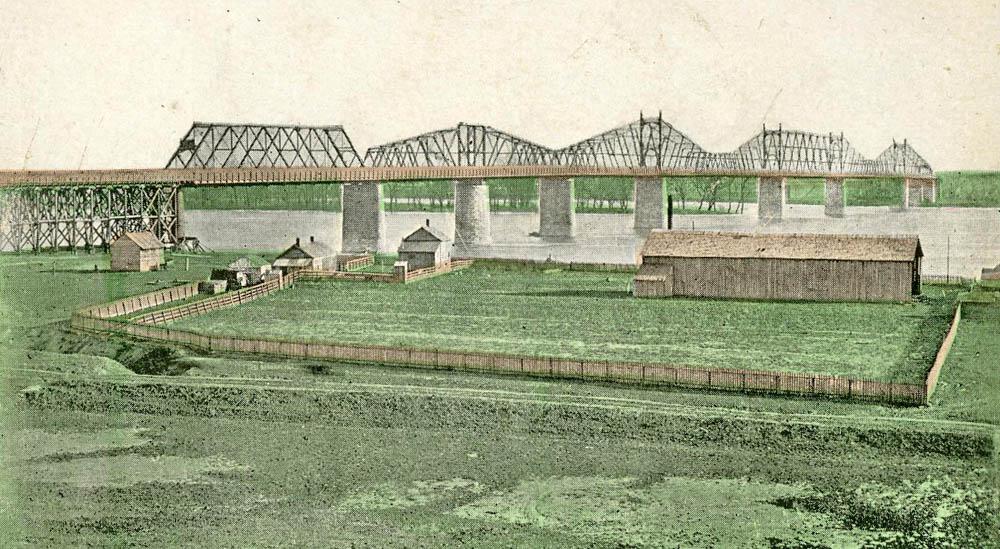
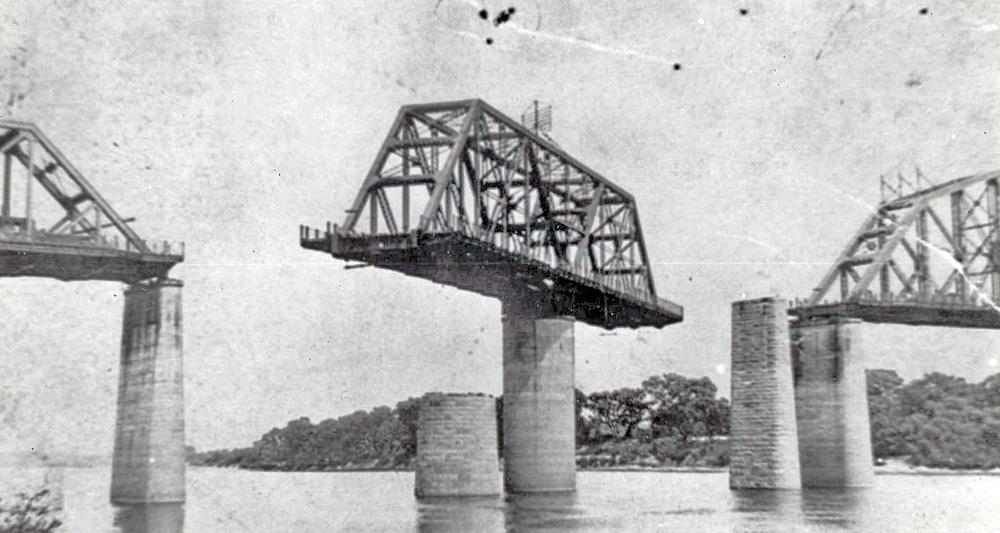
As New Albany and Louisville grew as industrial centers after the Civil War, transportation connections became vital for efficient movement of raw materials and finished goods. The first bridge across the Ohio at Louisville opened in 1870. Operated by the Louisville and Nashville and the Pennsylvania railroads, it improved access to Louisville but disadvantaged New Albany interests. Merchants had to use a branch line to Jeffersonville to ship materials across the bridge and pay heavy fees for use. In the late 1870s, New Albany businessmen, led by J. F. Gebhart and William S. Culbertson, began lobbying for a new bridge. Construction began in 1881 under the authority of the Kentucky and Indiana Terminal Company. The new structure, “the Kentucky and Indiana Bridge,” or “K&I,” was one of the largest and heaviest of its kind. Built of through-truss cantilevered construction, it spanned the river on the west side of New Albany, roughly in line with Vincennes Street. The bridge opened on July 5, 1886, and quickly became heavily used. Total construction costs exceeded $2 million.

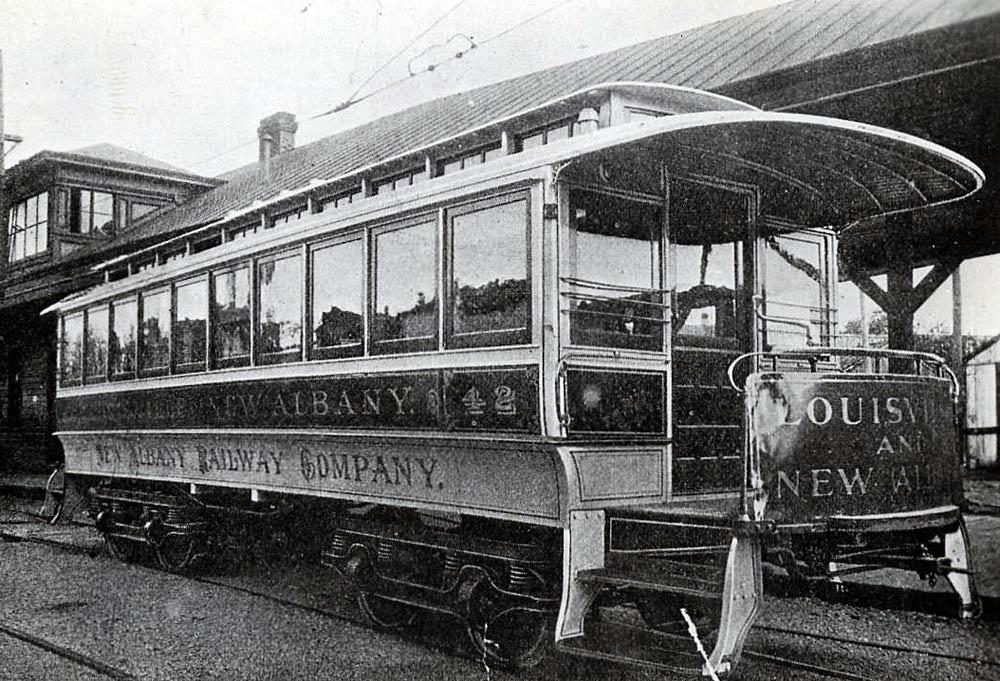
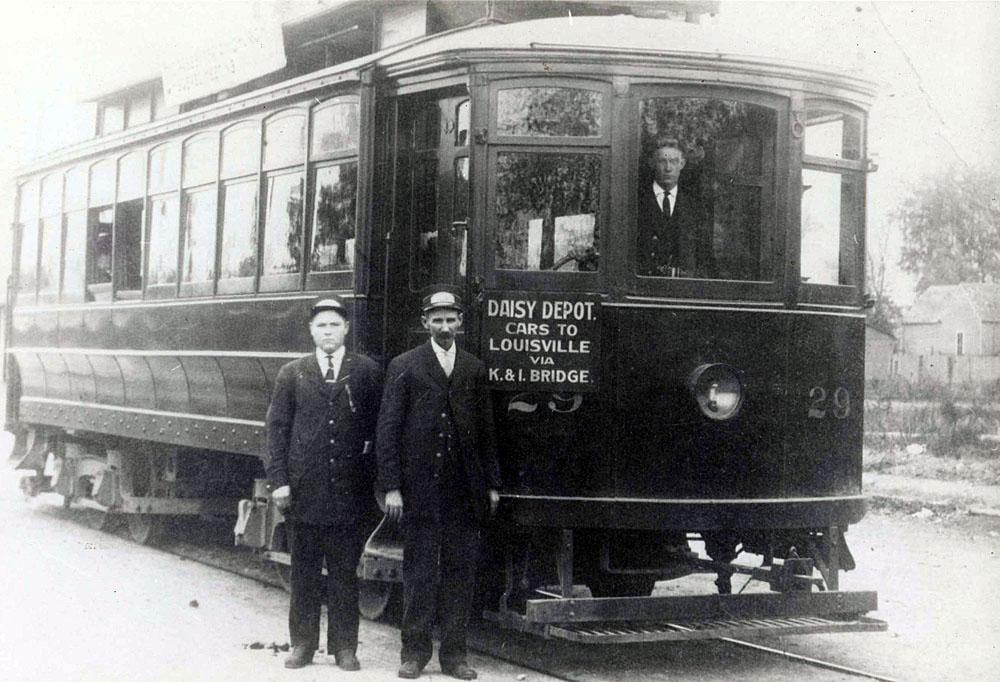
The K&I Bridge not only benefited New Albany manufacturers but made commuting possible for thousands of workers. A commuter railroad, “The Daisy Line,” carried passengers from several locations in New Albany to destinations in Portland and Louisville. Three-car trains operated from 6:00 a.m. to midnight daily. By 1906, the line carried 1,250,000 passengers annually. The Daisy Line switched from steam to electric power in 1893 and became part of the Louisville streetcar system about 1908.

The K&I Bridge also facilitated wagon traffic across the river. Wagon lanes paralleled the railroad track running down the center of the bridge. Drivers paid tolls to cross.

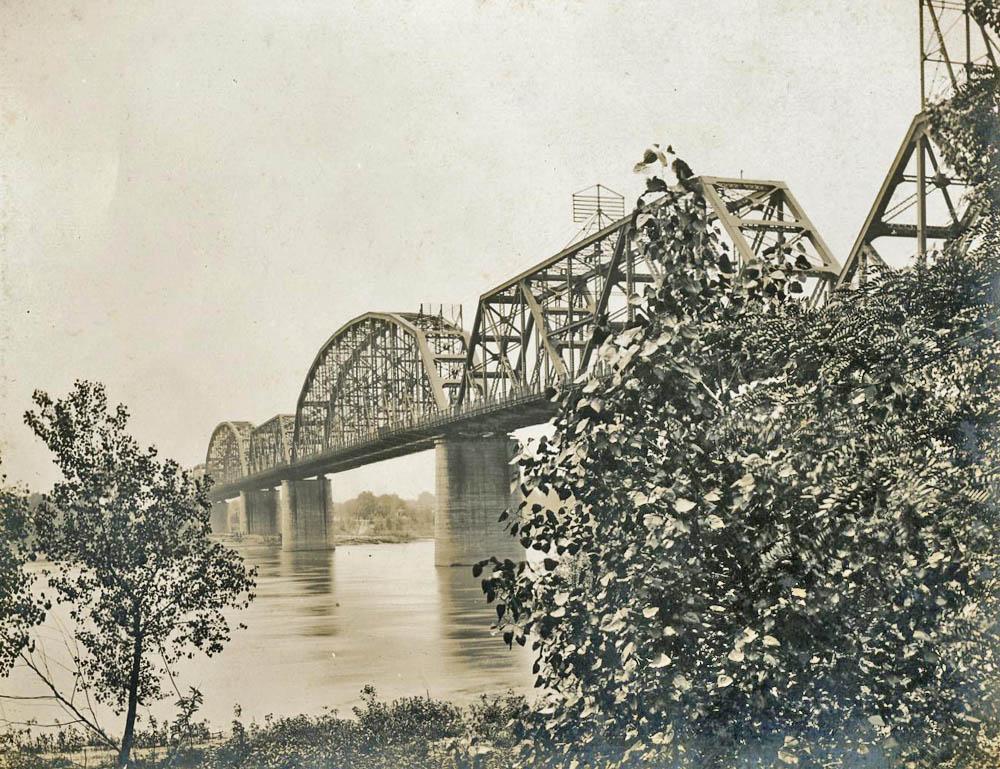
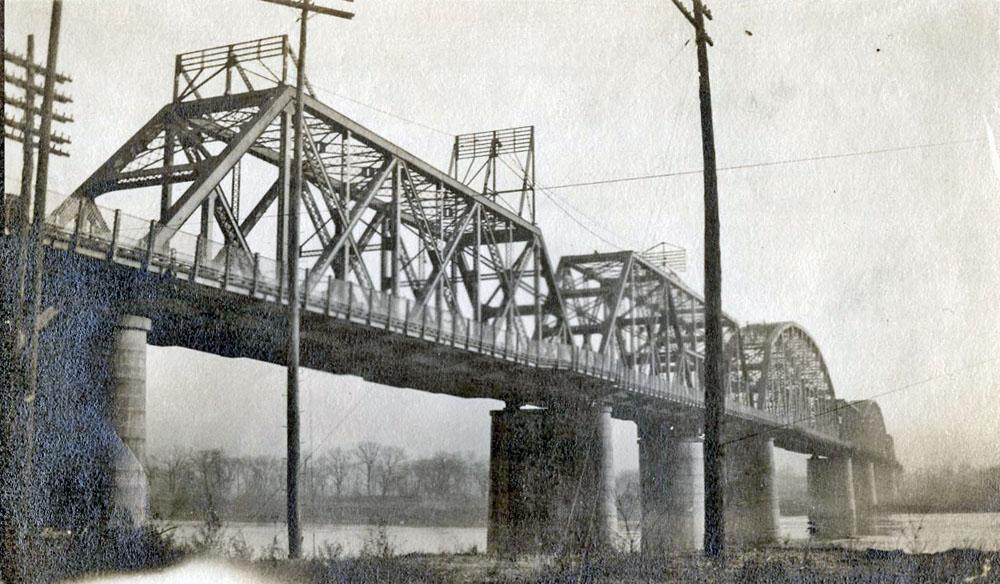
In 1910, increased train speeds and loads led the three railroads using the K&I – the Baltimore and Ohio, the Monon, and the Southern – to build a new bridge alongside the old one. The new structure was reputed to be the second-heaviest bridge in the world with a total weight of more than 18 tons. Construction proceeded swiftly, facilitated in part by access from the existing bridge. The new bridge had unlimited carrying capacity and opened on November 27, 1912. It featured double-track rails and improved side paths for automobile traffic. The bridge also had a rotating wing span designed to allow for passage of tall ships. Officials opened the span only four times before disabling it in 1955.

In 1929, the opening of the Second Street Bridge between downtown Louisville and Jefferson had little effect on K&I traffic. When the Sherman Minton Bridge opened in 1969, however, use dropped dramatically. The number of cars and trucks crossing the K&I fell from 75,000 to 17,000 in a year. Officials soon discontinued toll collection and switched to an honor system. In 1979, an accident involving an overloaded truck closed the automobile lanes. The K&I continues to carry Norfolk Southern Railway freight trains. In recent years, efforts to reopen the automobile lanes for pedestrian and bicycle traffic have kept the K&I Bridge in the news but have proven unsuccessful because of opposition from Norfolk Southern officials.

Images
Wagon Path
Wagon Path Horse-drawn wagons pass each other on the wagon path. From the beginning, the K&I was intended to facilitate rail, wagon, and pedestrian travel. Image courtesy of New Albany-Floyd County Public Library Digital Collections. Source: New Albany-Floyd County Public Library Digital Collections Date: 1886
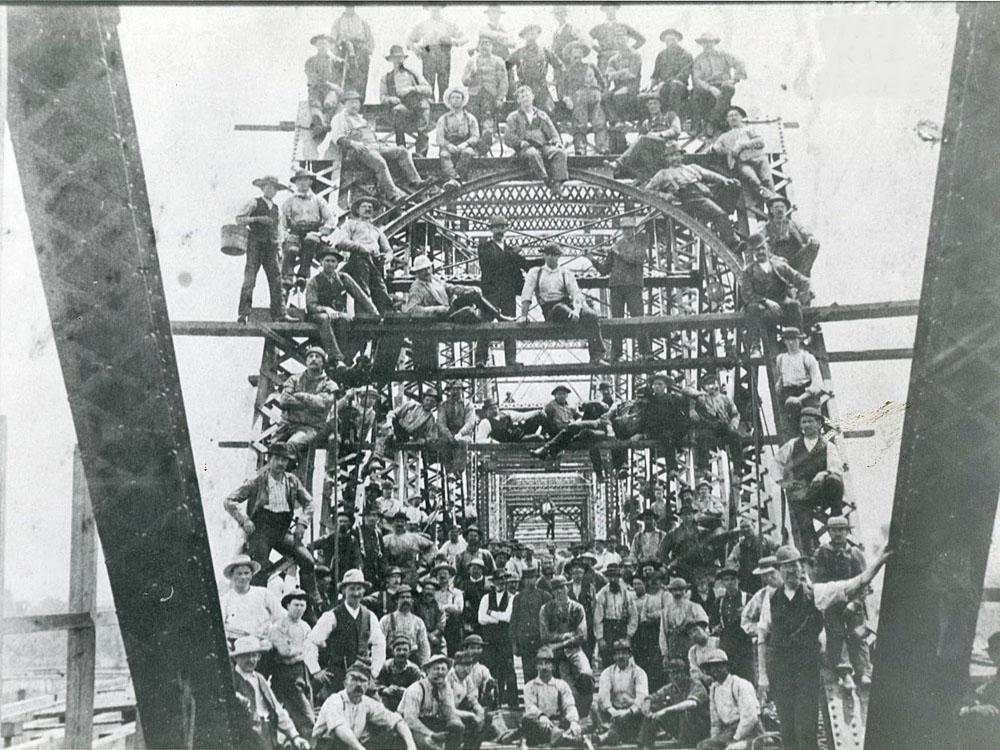
Workers on first K&I Bridge
Workers on first K&I Bridge Workers gathered for a photo to celebrate the near-completion of the bridge, circa 1896. Image courtesy of New Albany-Floyd County Public Library Digital Collections Source: New Albany-Floyd County Public Library Digital Collections Date: 1886
A Local Attraction
A Local Attraction Postcard view of the K&I bridge, 1910. New Albany residents took great pride in the bridge, which represented an impressive feat of engineering and boosted the city's economy. Source: Courtesy New Albany-Floyd County Public Library
Second K&I Bridge
Second K&I Bridge New Albany photographer Raymond Hessing captured this image of the bridge in the 1940s. Image courtesy of New Albany-Floyd County Public Library Digital Collections Source: Raymond Hessing, New Albany-Floyd County Public Library Digital Collections  Creator: Raymond Hessing Date: 1940s
Deck View
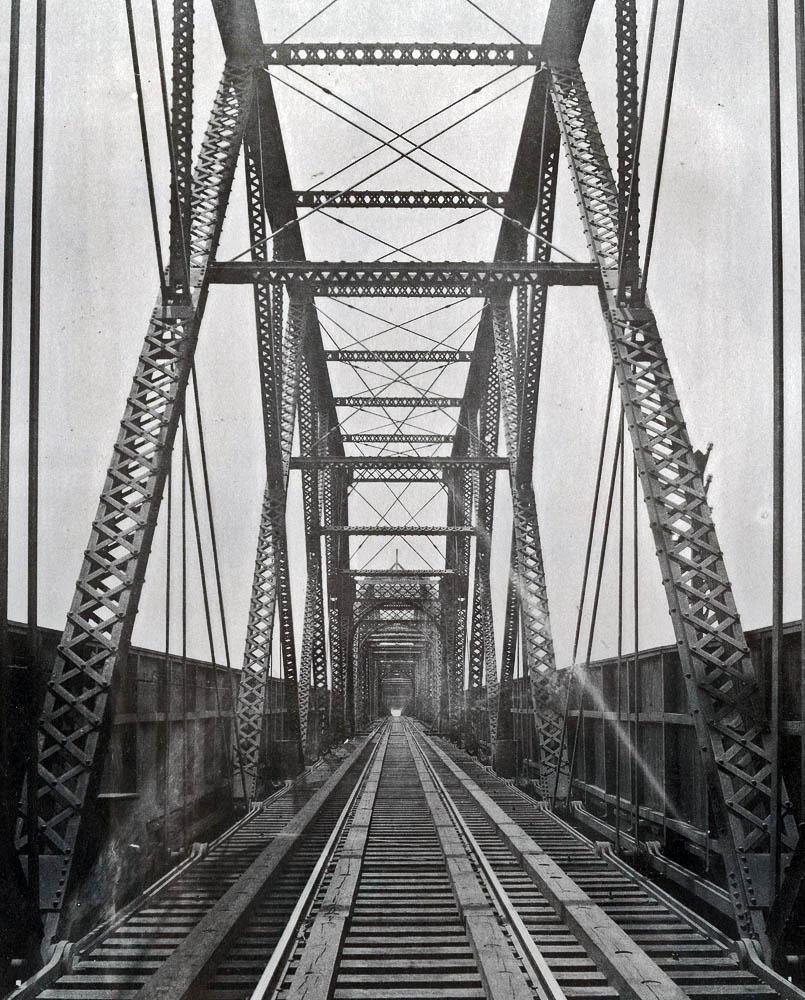
Deck View The deck of the K&I bridge in 1893. Image courtesy of New Albany-Floyd County Public Library Digital Collections, Source: New Albany-Floyd County Public Library Digital Collections Creator: Art Work in New Albany  Date: 1893
Construction of First K&I Bridge, ca. 1885.
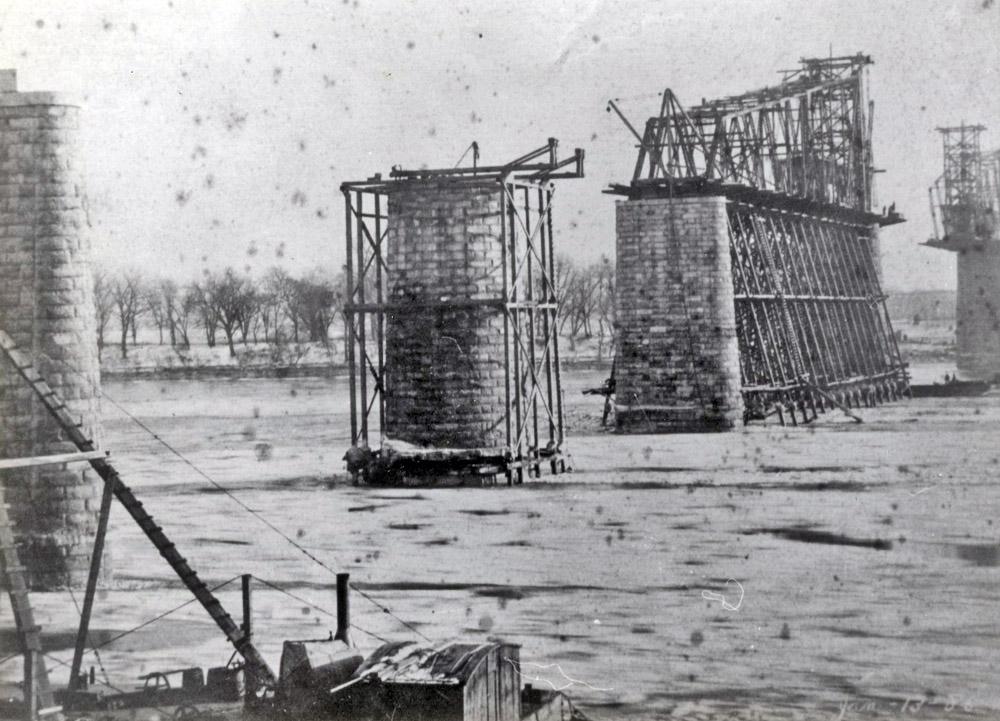
Construction of First K&I Bridge, ca. 1885. The first K&I bridge shown during construction, circa 1885. Photo courtesy of New Albany-Floyd County Public Library Digital Collections Source: New Albany-Floyd County Public Library Digital Collections Date: 1885
Open drawspan of K&I Bridge
Open drawspan of K&I Bridge The K&I Bridge features an open drawspan designed to allow tall ships to pass. It was only used on four occasions and is now permanently disabled. Image courtesy of New Albany-Floyd Public Library Digital Collection Source: New Albany-Floyd County Public Library Date: Date Unknown
K&I Bridge
K&I Bridge The K&I Bridge inaugurated a new era in commerce and communication between Louisville and New Albany. Image courtesy of New Albany-Floyd County Public Library Digital Collections Source: New Albany-Floyd County Public Library Digital Collections Date: Date Unknown
Daisy Line
Daisy Line The "Daisy Line" commuter railroad allowed residents of New Albany to commute to Louisville for work. By the early twentieth century, it carried 1,250,000 passengers annually. Image courtesy of New Albany-Floyd County Public Library Digital Collections Source: New Albany-Floyd County Public Library Date: 1894
Street railway employees and Streetcar #29
Street railway employees and Streetcar #29 Employees of the "Daisy Line" became well-known figures throughout New Albany. Image courtesy of New Albany-Floyd Public Library Digital Collection Source: New Albany-Floyd County Public Library Digital Collection Date: 1920
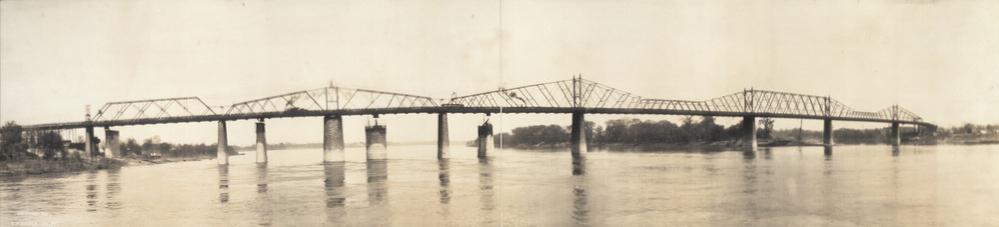
K&I Bridge ca. 1911
K&I Bridge ca. 1911 Panoramic view of the K&I bridge taken about 1911. Image courtesy of the Library of Congress. Source: Library of Congress Creator: C.F. Munkle Date: 1911

Location

Map

Metadata

Ashley Slavey et al., “Kentucky and Indiana Terminal Bridge,” Discover Indiana, accessed October 22, 2026, https://discoverindianahistory.org.curatescape7.reclaim.hosting/items/show/131.