Studebaker Plaza

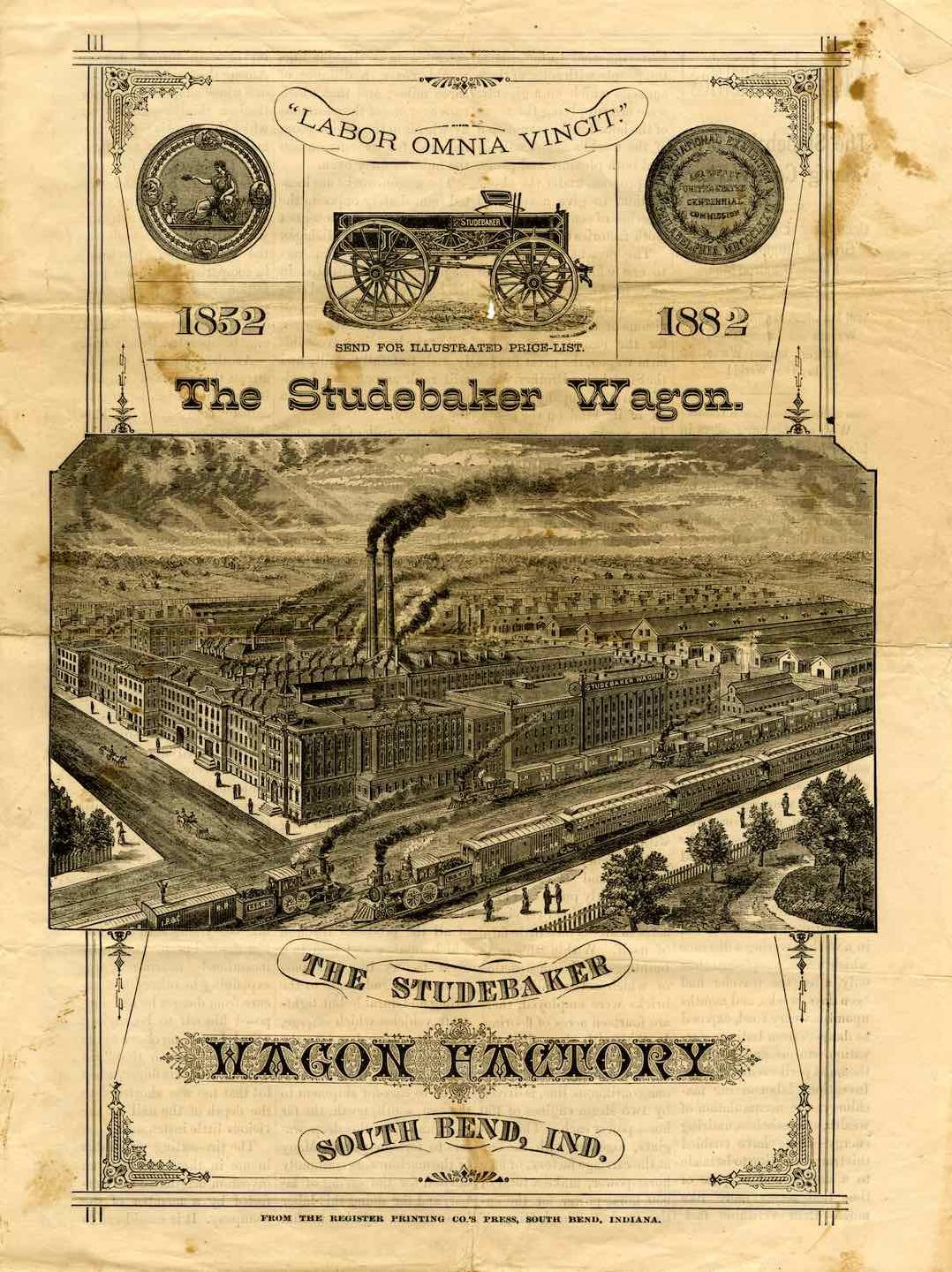
Studebaker Plaza, today a city-owned public space, serves as a reminder of the humble roots of South Bend's industrial age. The enormous Studebaker corporation grew from a small blacksmith shop established on the corner of Michigan Street and Jefferson Boulevard in 1852. Studebaker wagons began the industrial era of South Bend, catalyzing the city’s status as a manufacturing center until the 1960s, when the Studebaker Corporation closed. Studebaker Plaza, which opened in 2013, commemorates their significance.
H & C Studebaker, 1852
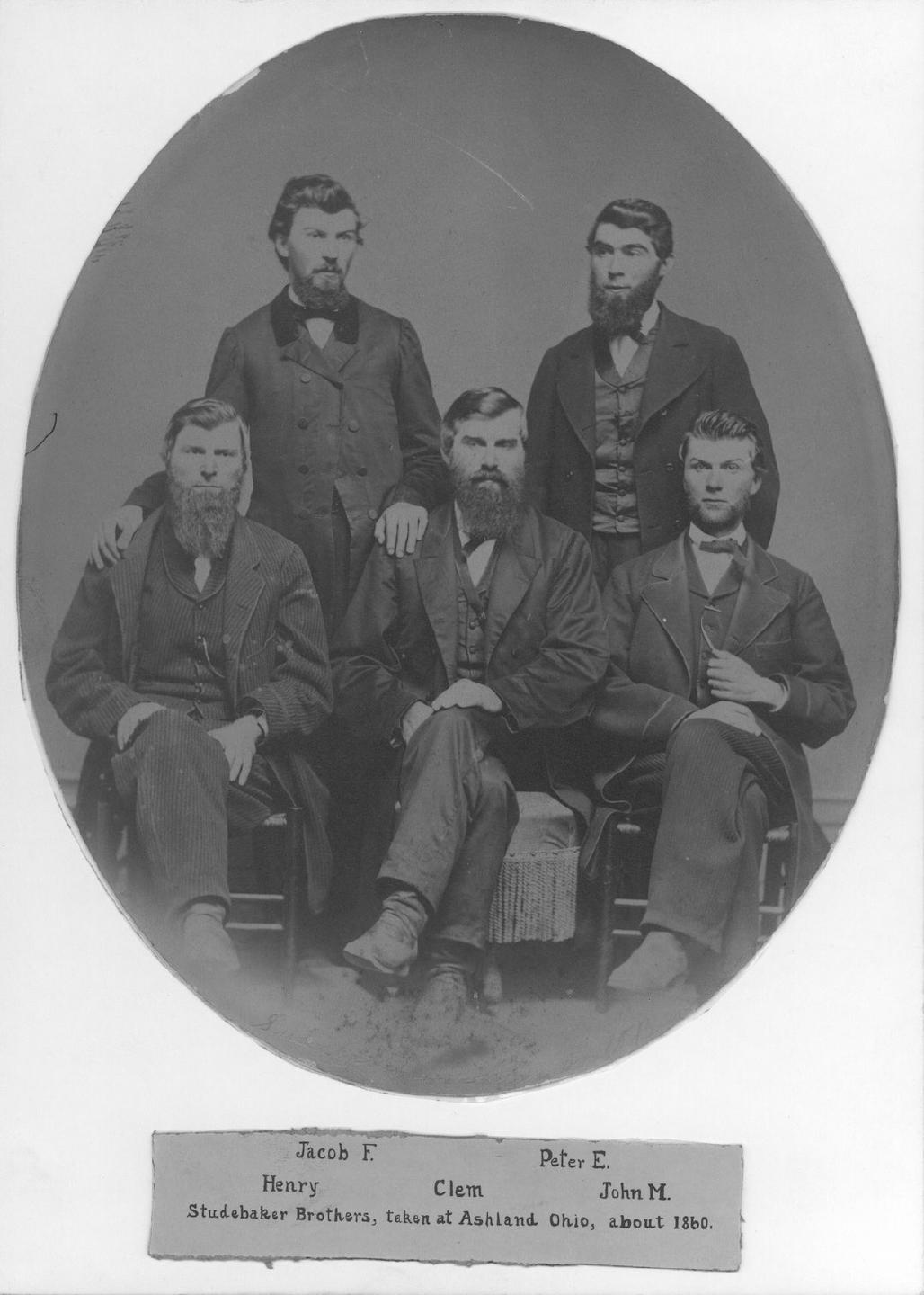
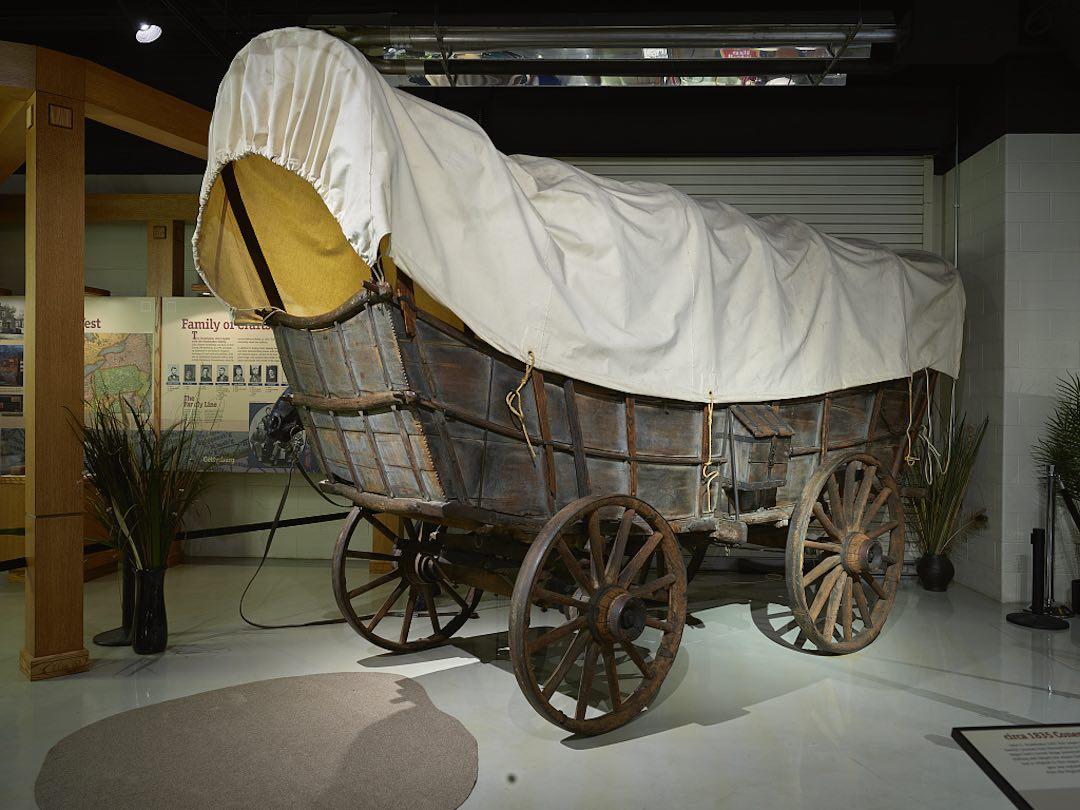
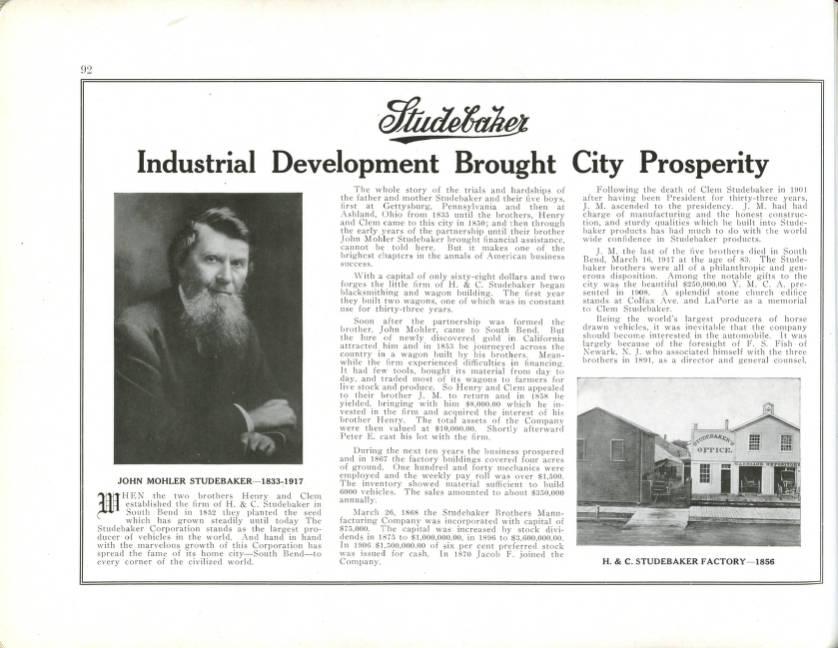
The corporation started in 1852 when the eldest Studebaker brothers, Henry and Clement, opened H & C Studebaker Blacksmith Shop on this site. They were later joined by their brothers: John Mohler, Peter Evans, and Jacob Franklin who helped expand the business. The three eldest brothers were born in Pennsylvania to John Clement Studebaker and Rebecca Mohler. The family moved to Ashland, Ohio, birthplace of the younger brothers, in 1835, and opened a blacksmith and wagon shop. As young adults in search of financial opportunities and seeking a shop of their own, Henry and Clement moved to South Bend. The rest of the Studebaker family followed in 1851.
Military Contracts Spark Growth 1850s-1860s
A military contract helped transform Studebaker from a small South Bend shop to an industrial factory. It also broke up the founding pair of brothers. Henry and Clement took on a military subcontract to make 100 wagons for the Federal Army in 1857. Once the contract was completed, Henry decided it was against his Dunkard, or German Baptist, beliefs to supply goods for the military. He and Clement solicited younger brother, John Mohler, who had saved up $8,000 making wheelbarrows in California during the Gold Rush, to return to South Bend. John bought out Henry’s portion of the business. Henry retired to a life of farming.
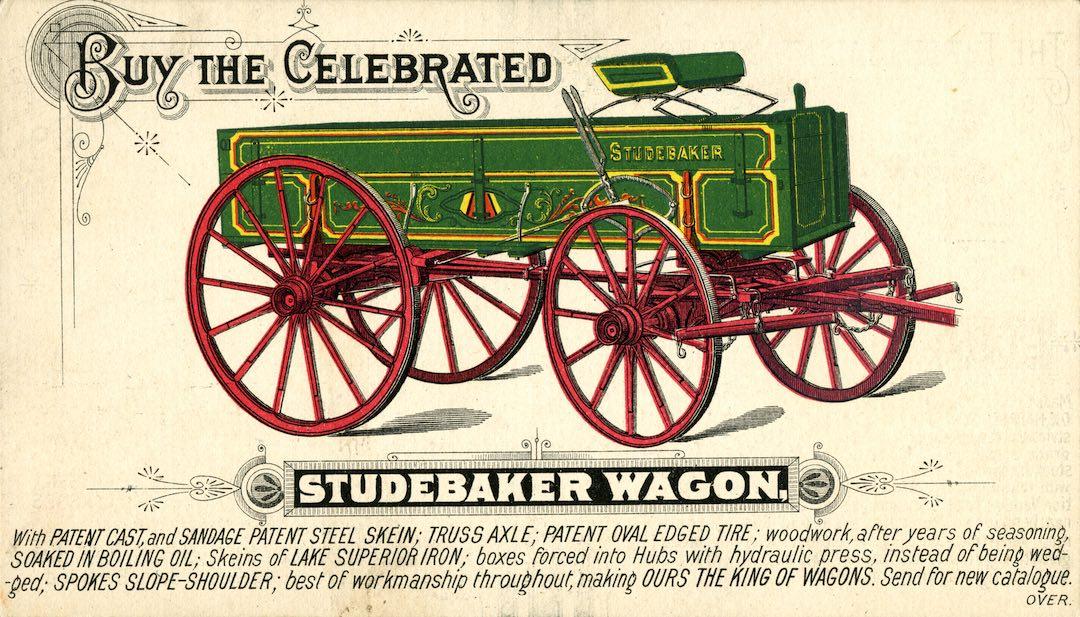
During the Civil War, Studebaker supplied the Union Army with wagons, which turned out to be a key business move. Civil War veterans sought out the dependable Studebaker wagons they knew they could trust. In the 1860s the brothers went from manufacturing made-to-order wagons in their small shop to building a large factory south of town for mass production.
Growth did not stop there for the Studebakers. Peter built their first wagon “dealership” next to his Goshen, Indiana shop before joining his brothers in South Bend in 1863. By 1868, they chartered their business as the Studebaker Brothers Manufacturing Company with $250,000 in assets, nearly $4 million today.
Images