Filed Under Story

"Eliza's House": Home of John Van Zandt

Slavery and the Law

Eliza Harris, the Black woman who sought freedom with her child in 1838, journeyed north from the Rankin house. The further she traveled, the closer safety may have seemed. But the reality was that the Underground Railroad was threatened continually by slave catchers, police, and pro-slavery Northerners. By the 1830s, many freedom seekers were encouraged by active conductors, who shepherded them along the network of stops, to aim for Canada. The Fugitive Slave Act of 1793 allowed slave owners and their agents to search for freedom seekers in free states. Under that law, if an escaped slave was found, they were to be brought before a local judge and provide evidence proving that person was enslaved. If the evidence was sufficient, the judge signed an affidavit allowing the freedom seekers to be returned. States including Indiana passed their own fugitive slave laws clarifying steps that must be taken by slave catchers and anyone representing the law.

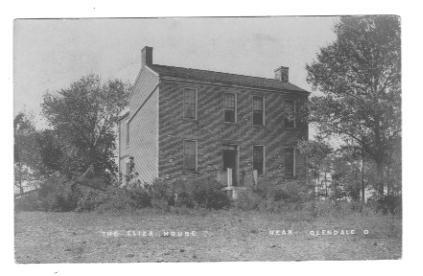
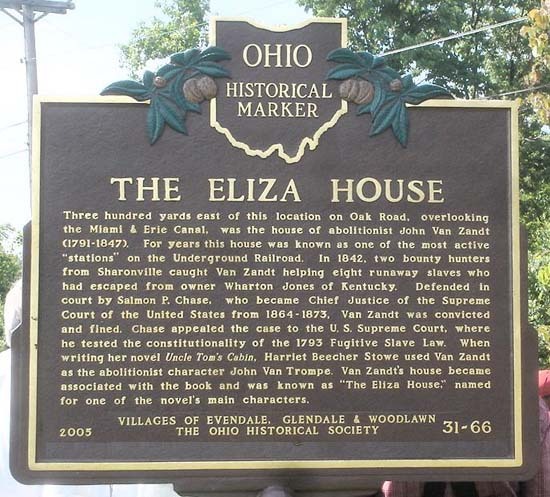
In Ohio, the 1793 federal Fugitive Slave Act was challenged in the 1847 Supreme Court case of Jones vs. Van Zandt. John Van Zandt was an Ohio abolitionist sued by the slaveholder Wharton Jones for monetary damages. Jones argued that Van Zandt was financially liable for the loss of his enslaved person because Van Zandt did not abide by the law that required him to return the individual considered Jones’ property. Van Zandt’s lawyer, Salmon P. Chase, argued that slavery was not legal in Ohio and thus Van Zandt should not be responsible for reimbursing Jones for the loss of his property. Van Zandt lost the case, with the Supreme Court ruling that slavery was protected by the Constitution. John Van Zandt’s home stood here at the corner of Oak Road and Chester Road north of Cincinnati, Ohio. Stowe notes that Van Zandt was the inspiration of the character known as John Van Trompe in Uncle Tom’s Cabin. The home, now known as “Eliza’s House” on the historical marker that now stands at the site, was an active Underground Railroad station in this part of Ohio.

Images
Home of John Van Zandt
Home of John Van Zandt John Van Zandt’s home used to stand on this spot, which is now remembered by an Ohio historical marker. Van Zandt was known to hide freedom seekers in his basement before aiding them to the next stop on the Underground Railroad. Van Zandt was caught on one occasion and then sued for the value of one freedom seeker who was not returned. Source: Glendale Heritage Preservation Date: c. 1910
The Eliza House Marker
The Eliza House Marker This historical marker notes where John Van Zandt’s used to stand. It is said that Eliza Harris came to Van Zandt’s home after her time in Ripley, Ohio. Van Zandt was sued for his work in helping eight freedom seekers in their escape. Defended by Ohio’s Salmon P. Chase, Van Zandt’s case was taken to the U.S. Supreme Court to test the constitutionality of the 1793 Fugitive Slave Law. Source: Glendale Heritage Preservation
Fugitive Slave Act
Fugitive Slave Act When the Fugitive Slave Act of 1850 passed, the debate over slavery in the United States heightened. This political cartoon was published in 1851 by an artist who strongly opposed the Act. Opponents of the Act are represented on the left side of the cartoon, with abolitionist William Lloyd Garrison and an unnamed Black man defending a Black woman from the slave catchers on the right, one of whom is pictured riding on the back of Secretary of State Daniel Webster. The portrayal of the African Americans in this cartoon is extremely unusual for the time. Instead of conforming to common negative beliefs about Black slaves, the man and woman embody the era's ideals of white manhood and womanhood. The man is dignified and noble as he protects the woman, who is feminine and submissive. For additional analyses of this cartoon, check out the following links: https://www.americanantiquarian.org/Exhibitions/Beauty/threats.htm https://www.loc.gov/pictures/item/2008661534/. Source: Courtesy of the Library of Congress: https://www.loc.gov/item/2008661534/ Date: 1851
Salmon P. Chase
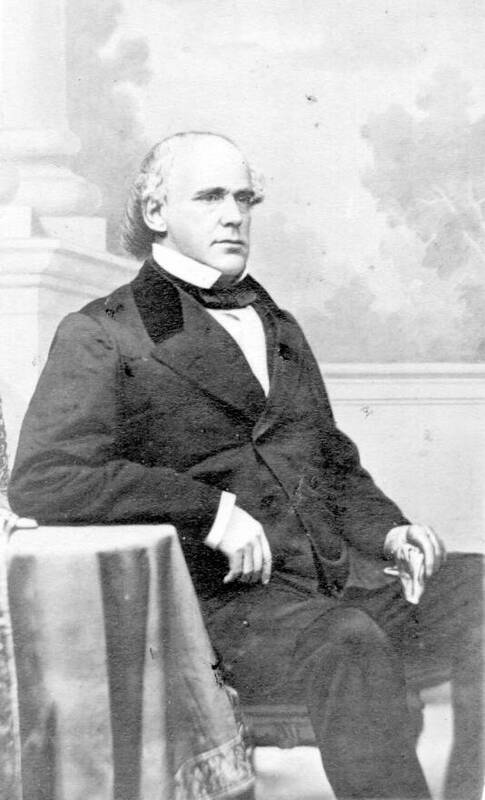
Salmon P. Chase Salmon P. Chase, who represented John Van Zandt in his case before the Supreme Court, is a notable figure in Ohio and national history. As a lawyer, he is tied to several cases where his anti-slavery support proved instrumental. In 1855 he was elected governor of the Buckeye state and tried unsuccessfully several times to win the presidential nomination. He went on to serve as a Chief Justice of the United States Supreme Court, nominated by Abraham Lincoln. Source: Courtesy of the Ohio History Connection, Salmon P. Chase Collection, SC 1828 Creator: C.D Fredericks & Co. Date: c. 1865-1870

Location

39.2620800, -84.4506300

Metadata

Joanna E. Hahn, “"Eliza's House": Home of John Van Zandt: Slavery and the Law,” Discover Indiana, accessed October 22, 2026, https://discoverindianahistory.org.curatescape7.reclaim.hosting/items/show/545.