Filed Under Story

George Rogers Clark Exhibit
In preparing for the United States’s Bicentennial, the federal government initially planned for a large-scale celebration held in Philadelphia, the country’s first capital city. The idea faced criticism from the public, who accused it of being elitist and ignoring the country’s diversity. The backlash influenced the federal government to step back and instead fund more localized commemorations. As a result of this new approach, many projects in Indiana focused on aspects of American history that resonated more with its residents.

The George Rogers Clark exhibit at the Indiana State Museum is one example. It ran from February 25, 1976 to the 200th anniversary of the Siege of Fort Sackville on February 25, 1979. Clark was an officer in the American militia who played a critical role in the siege. This major American victory during the American Revolution resulted in the United States acquiring Vincennes, Indiana’s oldest city. Vincennes was named the capital when the Indiana Territory was created in 1800.

The three-year exhibit was a major undertaking with more than two-hundred people trained as visitor guides. Prior to the exhibit’s dedication, a dinner was held with recipes from the 1700s and there was a city-sponsored parade. Taking up the entire second level of the museum, the exhibit examined the life of George Rogers Clark by detailing his upbringing, early military career, and his victories over the British during the American Revolution. The exhibit ended with a new technology called a “historic documentary environmental theater.” This theater was only the third of its kind in the country and the first to show a history-themed documentary. It consisted of images of Clark’s campaign being projected above a large topographical map that traced his progress by pinpointing it with light.

Images
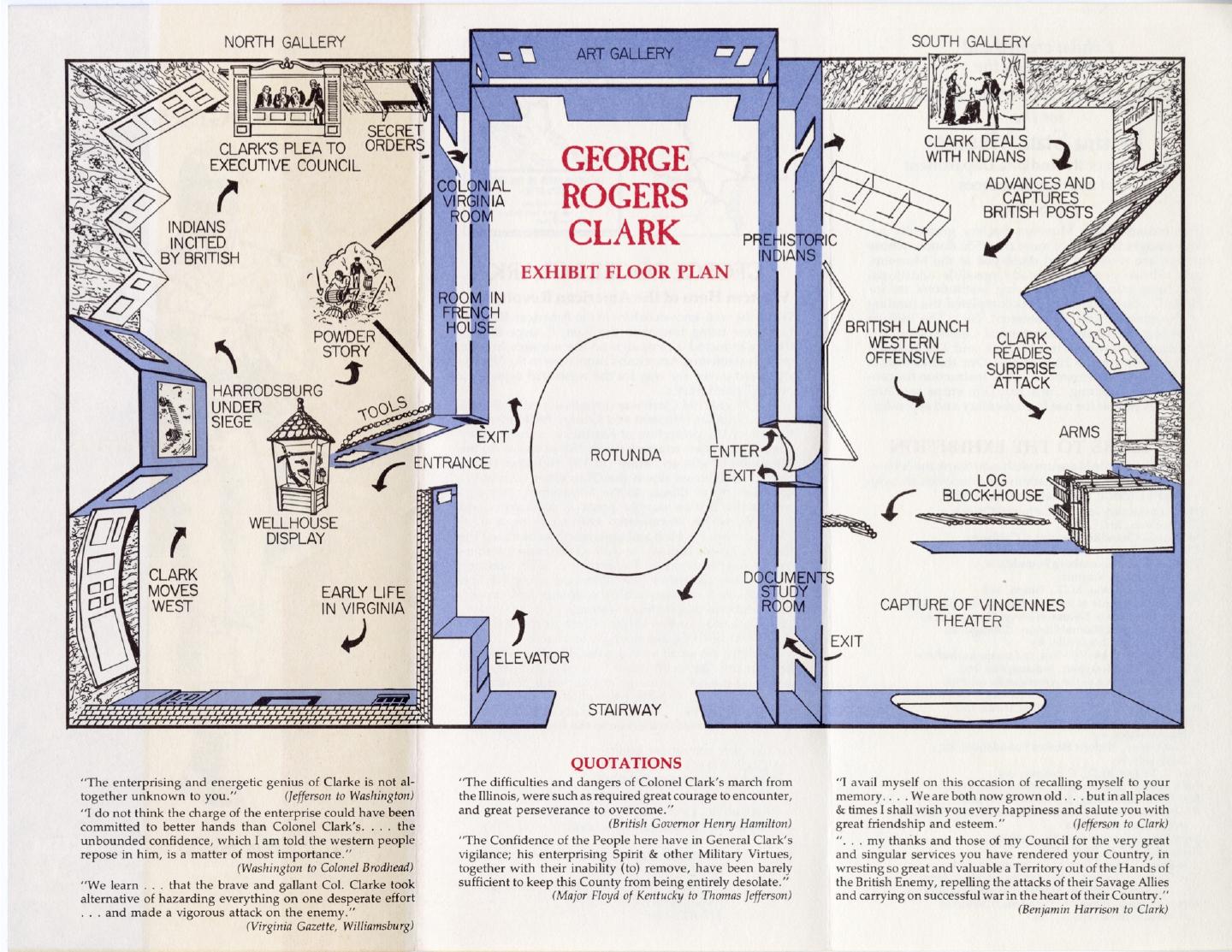
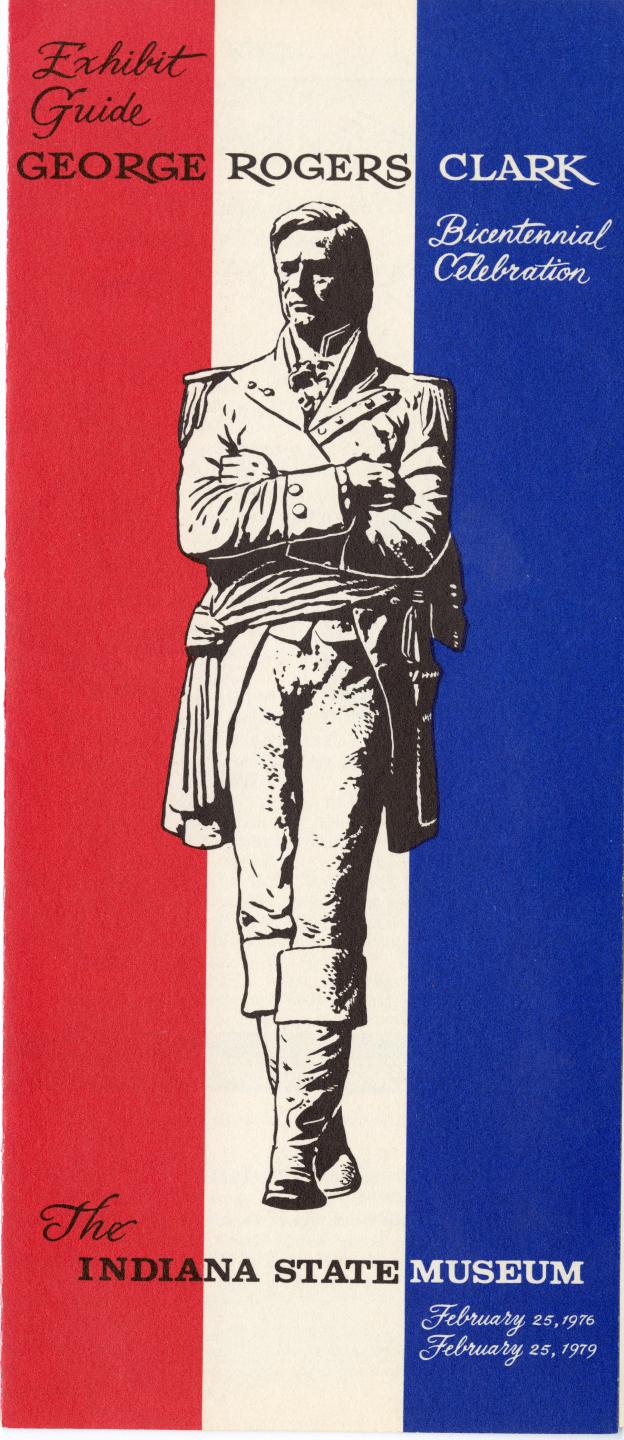
Exhibit Guide
Exhibit Guide The Indiana State Museum produced a glossy exhibit guide to accompany the 1976-1979 George Rogers Clark exhibit. Creator: Indiana State Museum Date: 1976 to 1979
Exhibit Floor Plan
Exhibit Floor Plan This floor plan shows the set up of the Indiana State Museum George Rogers Clark exhibit, complete with arrows suggesting how to maneuver the space. The ARBA allocated $30,000 for the three-year exhibit and the Lilly Endowment Inc. granted up to $75,000 in matching funds. Creator: Indiana State Museum Date: 1976 to 1979
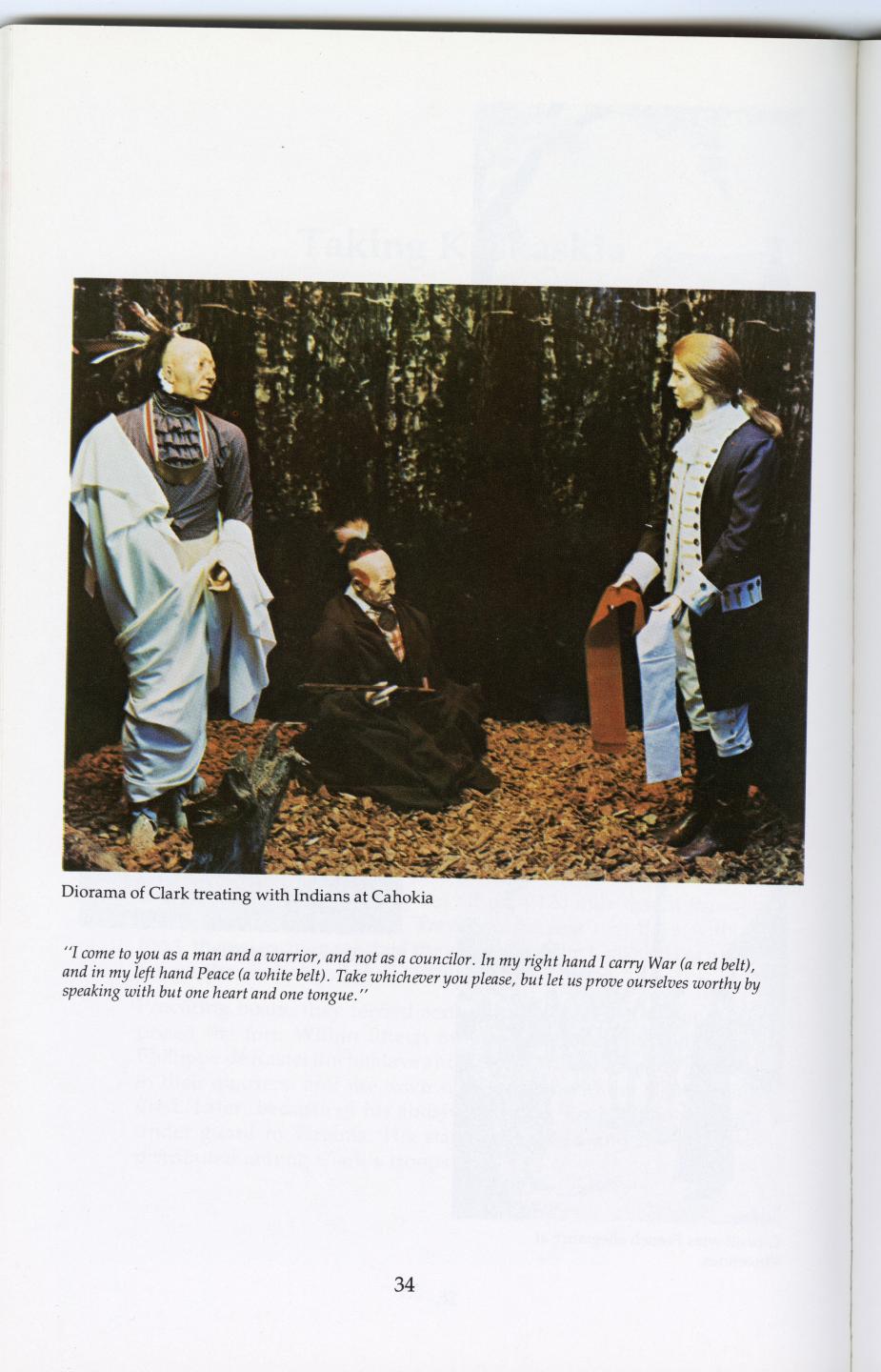
Diorama
Diorama This diorama is a good example of an outdated practice in museums. Until recently, dioramas were abundant in museums. However, they often incorrectly portrayed Indigenous peoples and other marginalized people. Creator: Indiana State Museum Date: 1976 to 1979
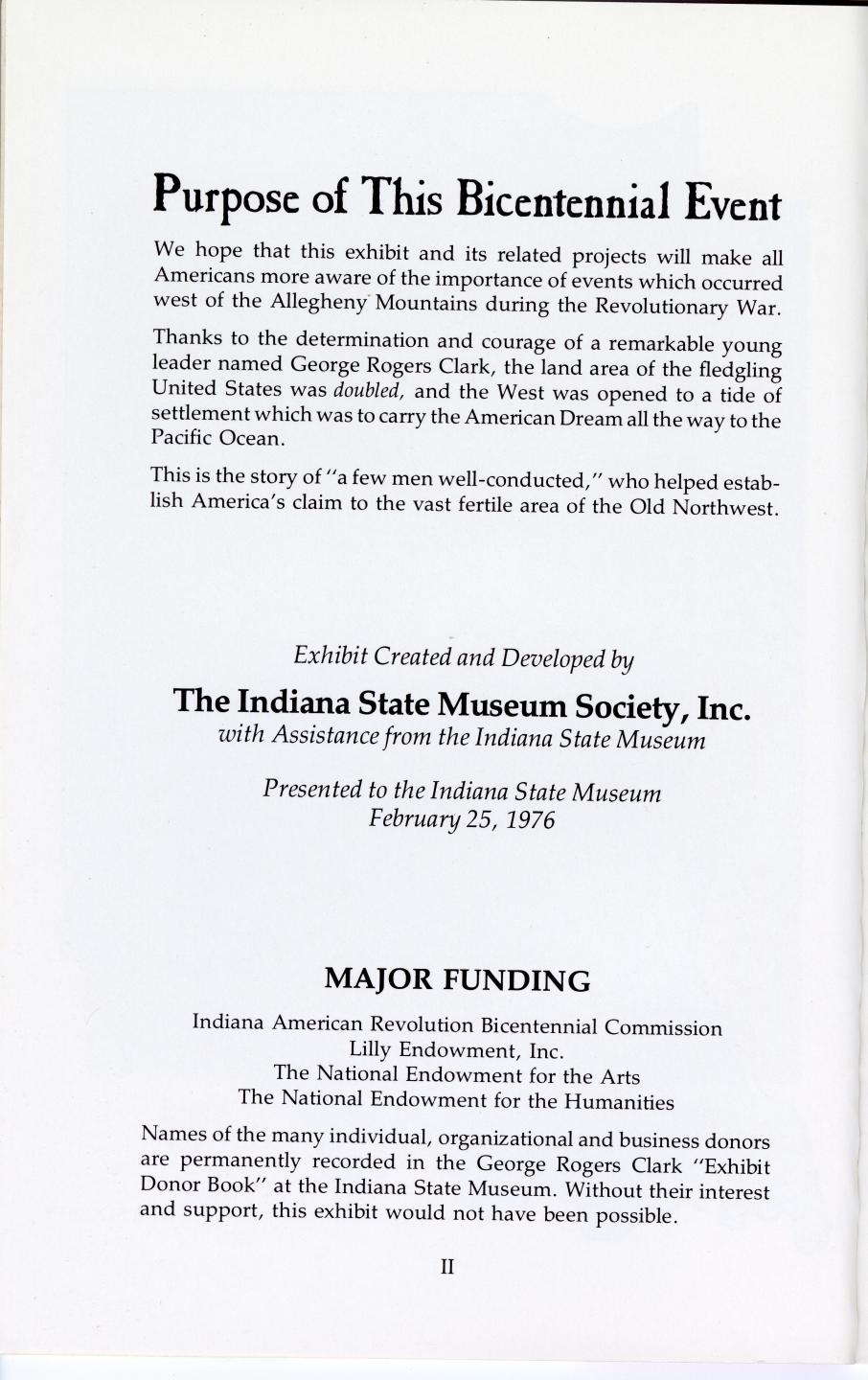
 Exhibit Purpose
Exhibit Purpose This page on the inside of the exhibit guide describes the goal the Indiana State Museum had for the exhibit. They hoped to make viewers aware of Indiana's connection to the Revolutionary War. Creator: Indiana State Museum Date: 1976 to 1979
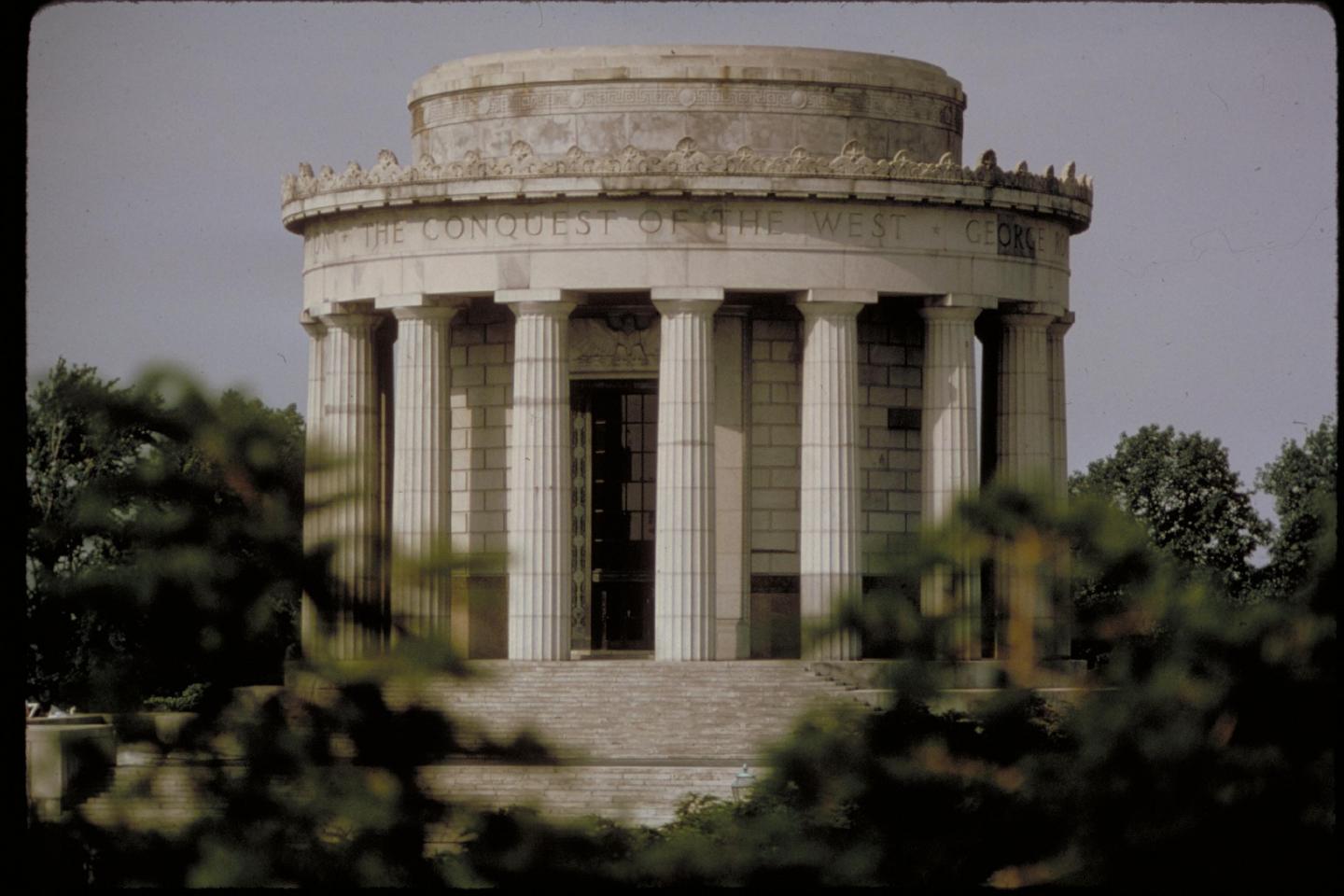
Clark NHP
Clark NHP The Vidette-Messenger of Porter County suggested following up a visit to the Indiana State Museum with a trip to Vincennes itself. There, visitors could see a monument on the site of the battle itself. Source: NPGallery Digital Asset Management System
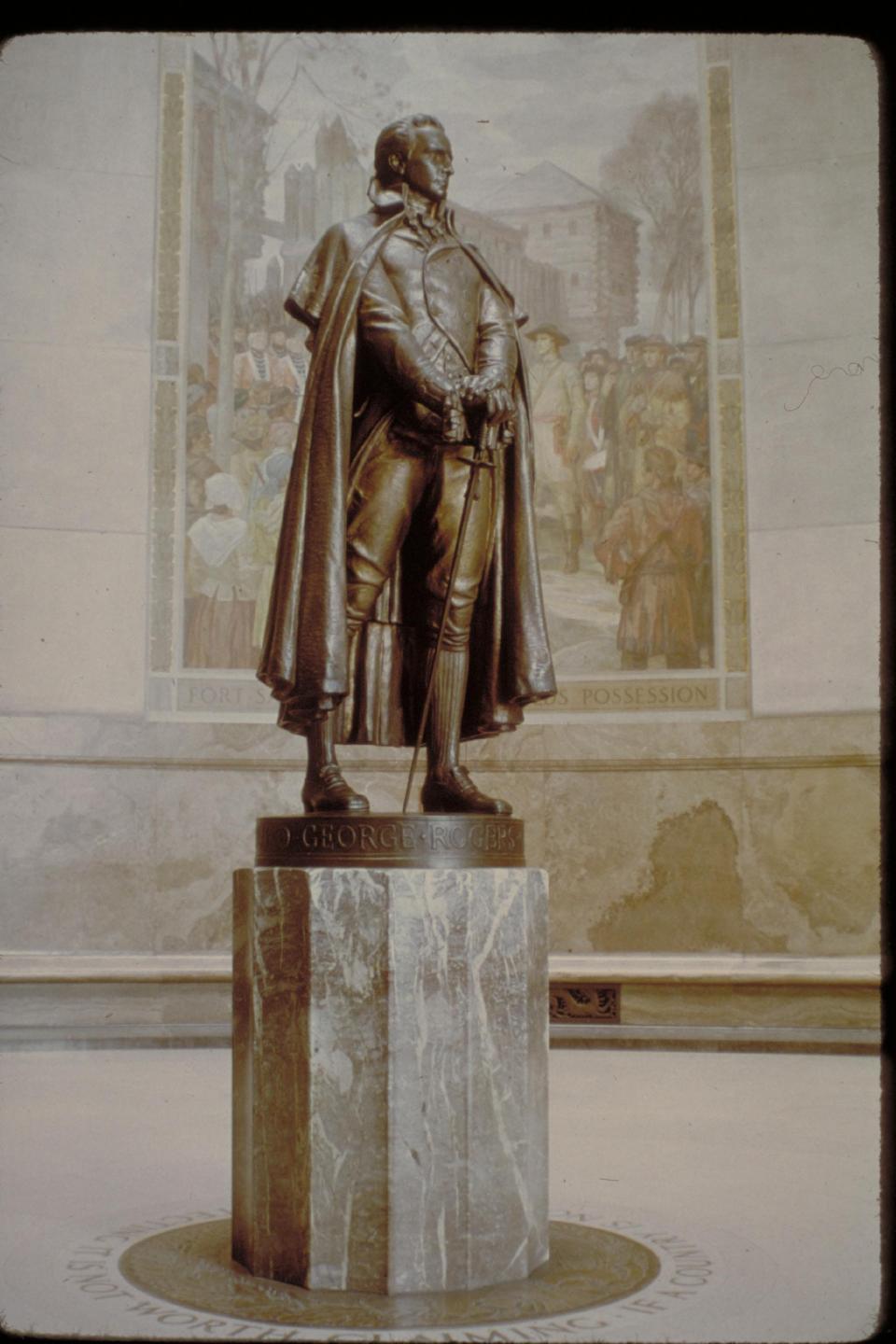
Clark Statue by Hermon MacNeil
Clark Statue by Hermon MacNeil In addition to putting on the exhibit, the Indiana State Museum also worked with the Indiana Department of Public Instruction to add information about Clark into the social studies curriculum. Source: NPGallery Digital Asset Management System

Location

Indiana State Museum, 650 W Washington St, Indianapolis, IN 46204

Metadata

Terrence McConnell and Summer Whelan, “George Rogers Clark Exhibit,” Discover Indiana, accessed October 22, 2026, https://discoverindianahistory.org.curatescape7.reclaim.hosting/items/show/664.