The Treaty of Greenville, 1795
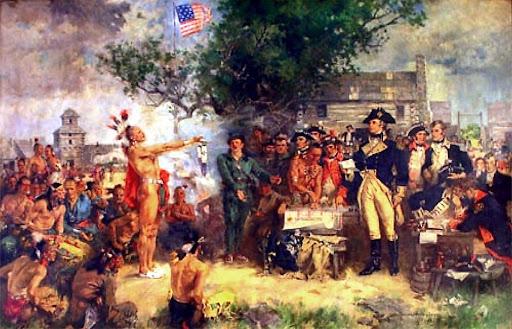
A painting depicting the signing of the Treaty of Greenville. Depicted centrally are Miami Chief Little Turtle, standing in the front left of the clearing, and Anthony Wayne, standing central right in uniform. Wayne was the U.S. commander fighting against the Northwest Confederacy. Source: Courtesy of the Nottawaseppi Huron Band of the Potawatomi
The Treaty of Greenville, signed in 1795, was the result of a 10-year war between the United States and a loose alliance of Native American nations living in the Great Lakes region known as the Northwest Confederacy. The Confederacy included the Potawatomi, Shawnee, Miami, Wyandot, Cherokee, Iroquois, Delaware, and more. The lands in which these nations lived were given by Britain to the United States after the Revolutionary War, but without agreement or representation from these nations. This led to an open war, beginning in 1785 and lasting until the Battle of Fallen Timbers in 1794. A brief battle in what is now northwestern Ohio, it was a decisive U.S. victory against combined Native American forces. Peace talks began in December of 1794 between the individual nations that made up the Northwest Confederacy and the United States.
The Treaty of Greenville was signed in 1795 between most members of the Northwest Confederacy and the U.S. Terms of the treaty sold Native American lands in what is now Indiana, Ohio, and Illinois. These were a majority of lands in what is now Ohio as well as strategic chunks of land around forts and settlements such as Chicago in Illinois and Vincennes in Indiana. The members of the Northwest Confederacy were in no position to refuse these demands after their defeat and accepted the terms. The treaty also importantly created the “annuity” system, exchanging payments, yearly grants of money, goods, and supplies in exchange for Native American land.
This treaty served as the first major agreement with Native American nations in the northwest territories and was not met with unanimous support amongst Native peoples. Some, like the Miami chief Little Turtle, supported the treaty and advocated for friendship and cooperation with the U.S. This perspective was not always the case, as some nations that were part of the Northwest Confederacy were excluded from the Treaty of Greenville as they refused to give up their land. This treaty was the first step for the U.S. to start seizing Native lands in the northwest territory. It was also the first blow to Native independence in the region, and something that many Native nations would not accept without a fight.
Images
A painting depicting the signing of the Treaty of Greenville. Depicted centrally are Miami Chief Little Turtle, standing in the front left of the clearing, and Anthony Wayne, standing central right in uniform. Wayne was the U.S. commander fighting against the Northwest Confederacy. Source: Courtesy of the Nottawaseppi Huron Band of the Potawatomi
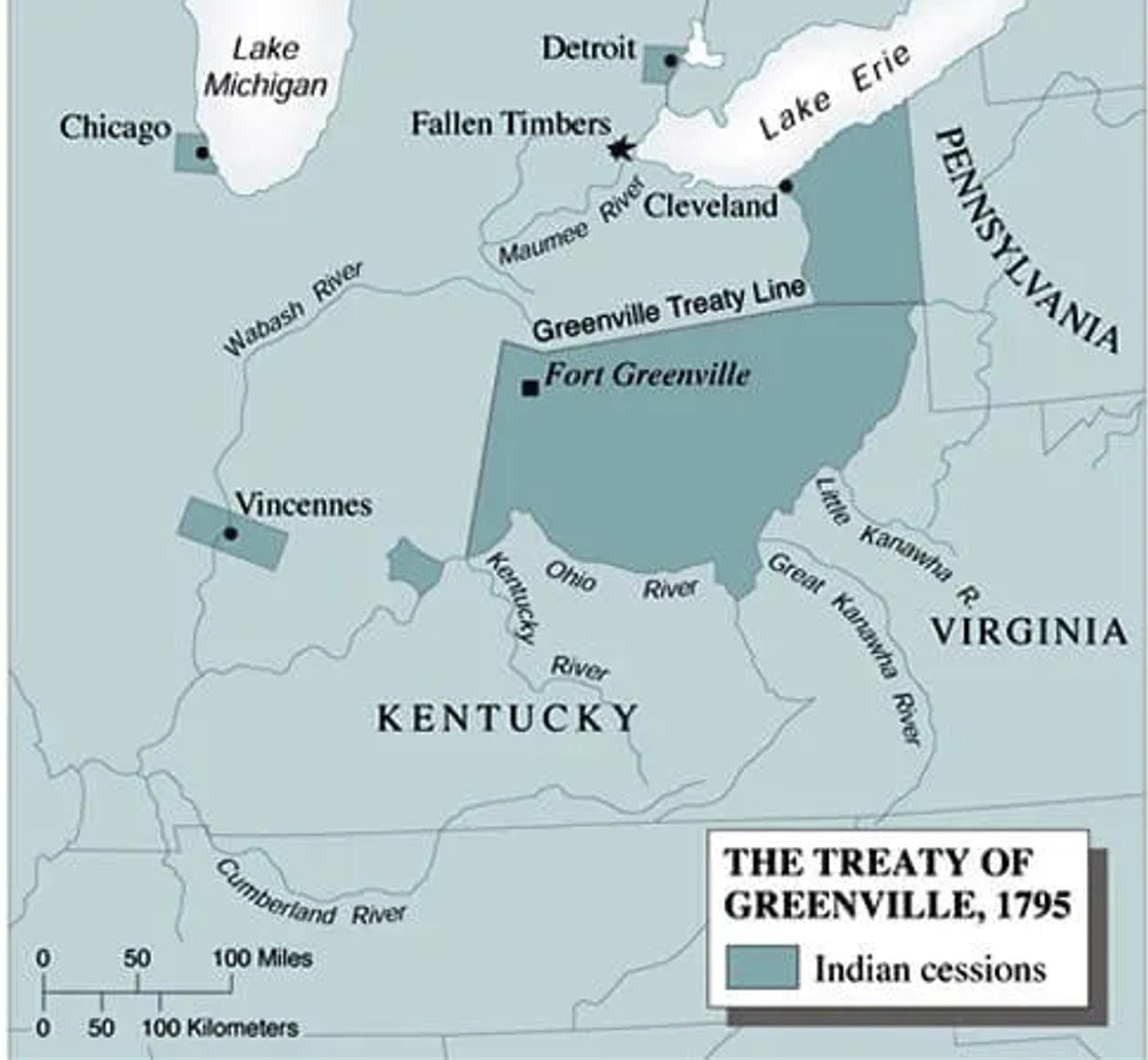
Shown is a map of the land ceded to the U.S. from the Treaty of Greenville shown in a darker shade of green. While not showing modern state lines, clearly shown is much of modern Ohio shaded in dark green as part of the treaty lands. Also illustrated are the sections surrounding important settlements. Source: Courtesy of History in Charts
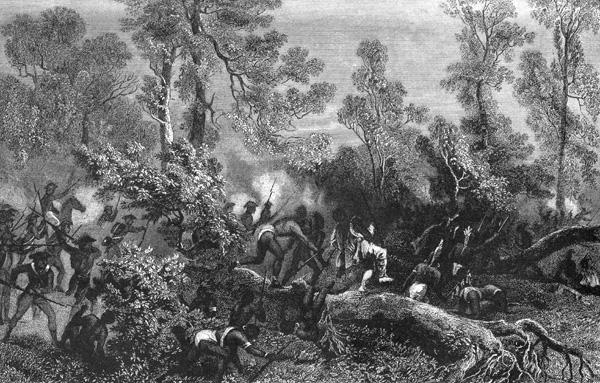
A painting depicting the Battle of Fallen Timbers, the final battle of the Northwest Indiana War. The battle got its name as it took place near the Maumee River in northwest Ohio after a tornado, creating a battlefield of fallen trees. Source: Courtesy of the US History images primary source material collection Creator: John Frost, Pictoral History of the U.S.
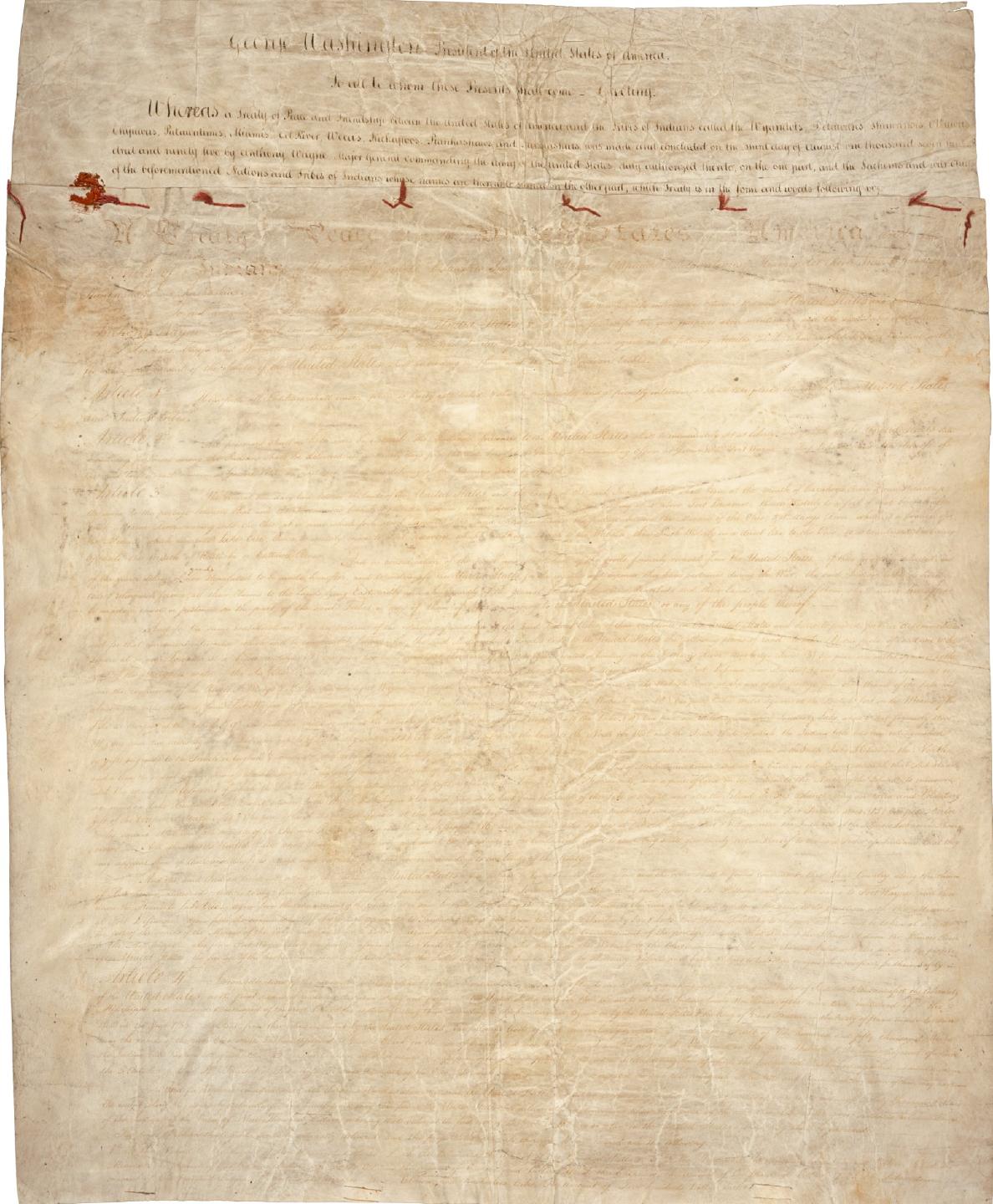
Pictured is the first page of the Treaty of Greenville. While very difficult to make out much in the way of actual text, the original copies of such treaties have not always survived to modern day. Source: Courtesy of Wikimedia Commons Creator: Screwing
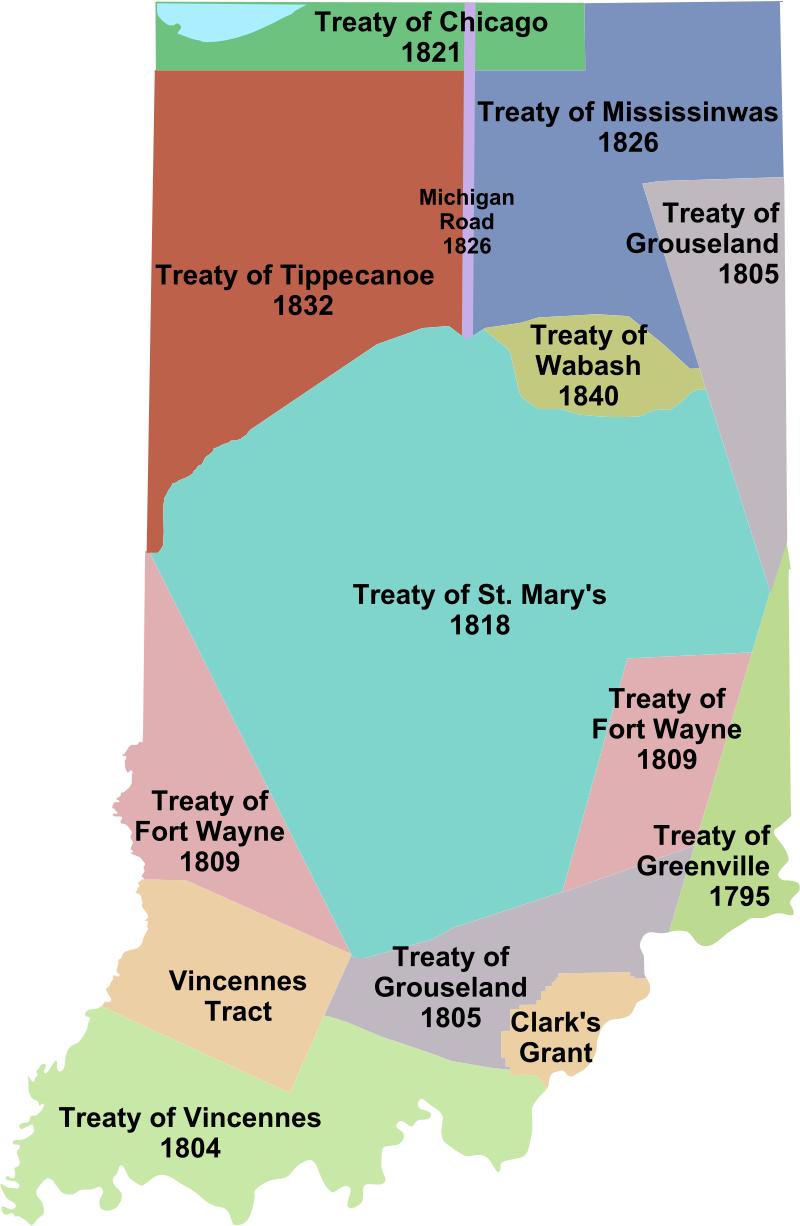
Illustrated here is a color coded map of Indiana showing the names of treaties, the associated dates, as well as the lands those treaties were related to. Look in the bottom right corner of this map for the Treaty of Greenville. Source: Courtesy of Wikimedia commons Creator: ArnoldPlaton