The Railroad Incline--The "Cut"
The Madison, Indianapolis & Lafayette Railroad (MI&L) was first conceived in 1836 when Indiana state legislators included it as part of the Internal Improvement Act. Indianapolis, the new state capitol, was in the early stages of becoming a city. Madison, however, was a booming metropolis that could support Indiana’s first Railway.
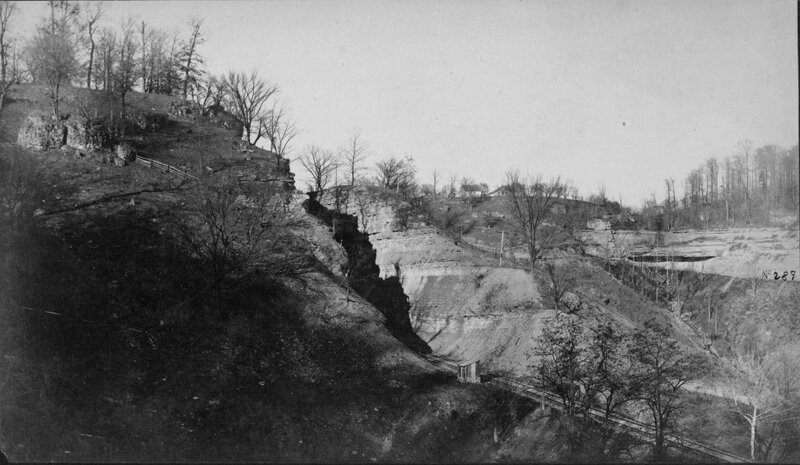
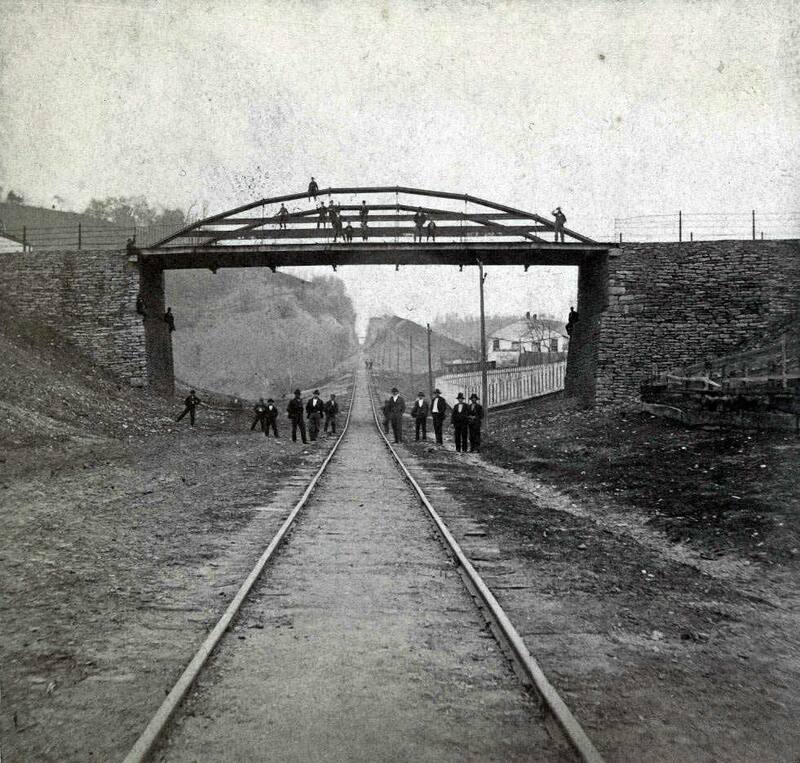
Detailed surveys for the railway were started in March of 1836. Contracts were awarded in September by the newly organized Madison and Indianapolis Railroad. Work on the first section between Madison and North Vernon began in 1837. It included a 7,012-foot incline with a grade of 5.89% in Madison, which was the steepest incline of any standard gauge, line-haul railroad in the nation.
Irish immigrant William Griffin came to Madison in 1837 to supervise construction, including the mostly Irish laborers who built the incline over the course of five years. Under a thin layer of topsoil, workers had to contend with 40 to 125 feet of limestone. It had to be first blasted with powder and then excavated and hauled away by laborers. The work required to build the incline was dangerous, backbreaking labor. The entire task, spectacular even by today's standards, wasn't complete until 1841. It's been estimated that close to 500,000 tons of earth and rock were hewn out of the west side of Irish Hollow, the hastily-constructed town where the Irish workers and their families lived.
Railroad construction in the United States was so dangerous that it was said that there was “an Irishman buried under every [Railroad] tie.” Irish immigrants became the primary labor force building American railroads because white business owners perceived Irish laborers as rowdy, drunken, and less valuable than other immigrant groups who had come to America. This perception was driven by racist ideologies that saw the Irish as disposable and easily replaced. Irish men who immigrated to the United States were often young and inexperienced so they needed whatever work they could find. Employers did not feel obligated to provide Irish workers with a livable wage or sturdy housing, nor did they care about the dangerous work conditions they were subjected to. Hence there was a good deal of truth to the saying about how many Irish men died as a result of their work building American railroads!
The first trip up the Madison, Indianapolis & Lafayette Railroad incline occurred November 3, 1841. The train’s passengers included former governor Noah Noble, who had been at the State’s head when the Internal Improvement Act was signed in 1836. A specially built, one-of-a-kind locomotive, known as the Reuben Wells, moved cars up and down the incline from 1868 – 1898. It is preserved and on exhibit at the Indianapolis Children's Museum.
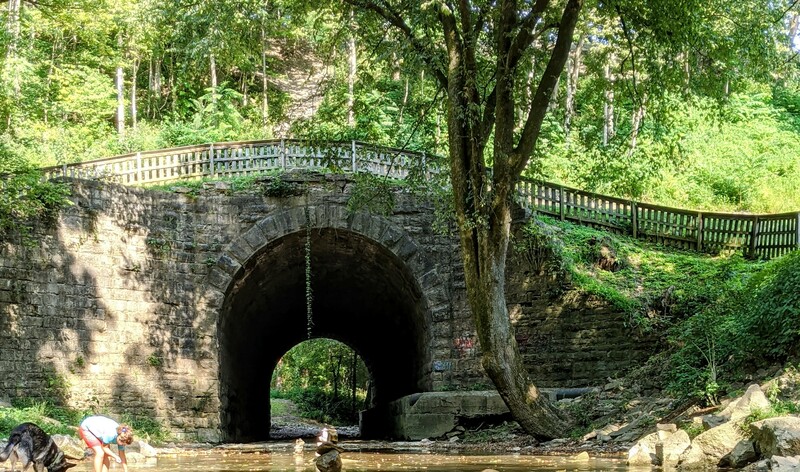
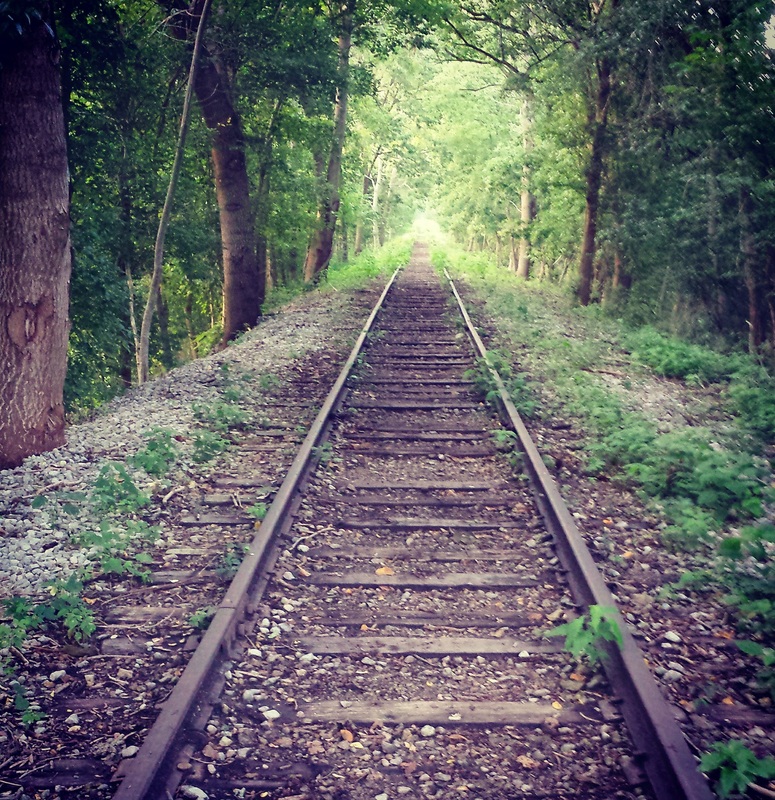
The Madison Railroad Incline Cut can still be seen in Madison today. The part of the tracks known as “the incline” or “the cut” begins north of the intersection of West Main and McIntire Streets, where a historic marker has been erected to commemorate the incline. It ends approximately where State Road 7 meets Terrace Drive on the hilltop. The Madison Heritage Trail follows the historic Madison and Indianapolis Railroad tracks partially up the hillside and includes a view of a stone arch culvert under the lower section of the incline. For more information, visit the Heritage Trail Facebook page.
Images